fill
same effect as Chrome
svg
The declaration changes our page the way it changes Chrome’s. What still differs between the two renderings was there before the declaration too, on the same page without it (mostly the fonts): no larger with it, or in the same places and no stronger.
What the specification says
| Initial value | black |
|---|---|
| Applies to | shapes and text content elements |
| Inherited | yes |
| Percentages | N/A |
| Computed value | as specified, but with <color> values computed and <url> values made absolute |
| Syntax | <paint> |
The measurements
One example. Each is one declaration on a small page, drawn by Chrome and by our engine. Drag on a picture to move the line between them.
fill:#e07a1f
same effect as Chrome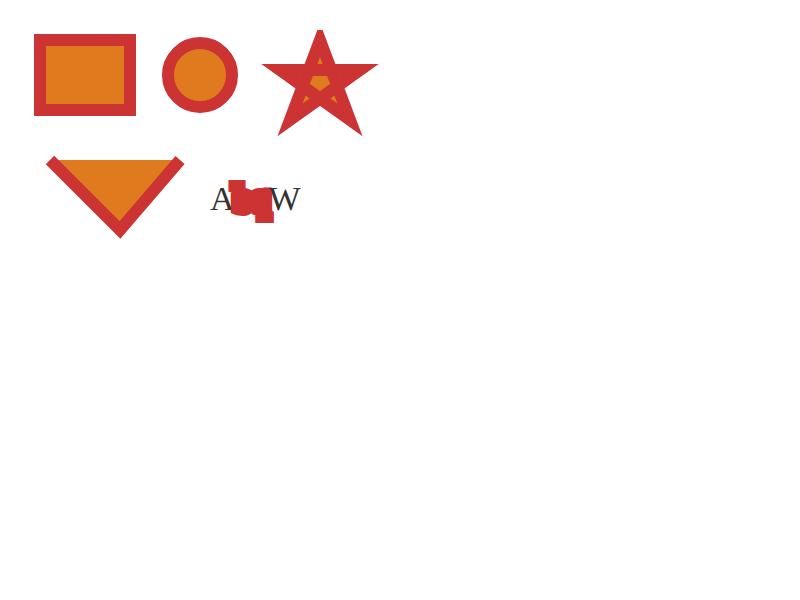
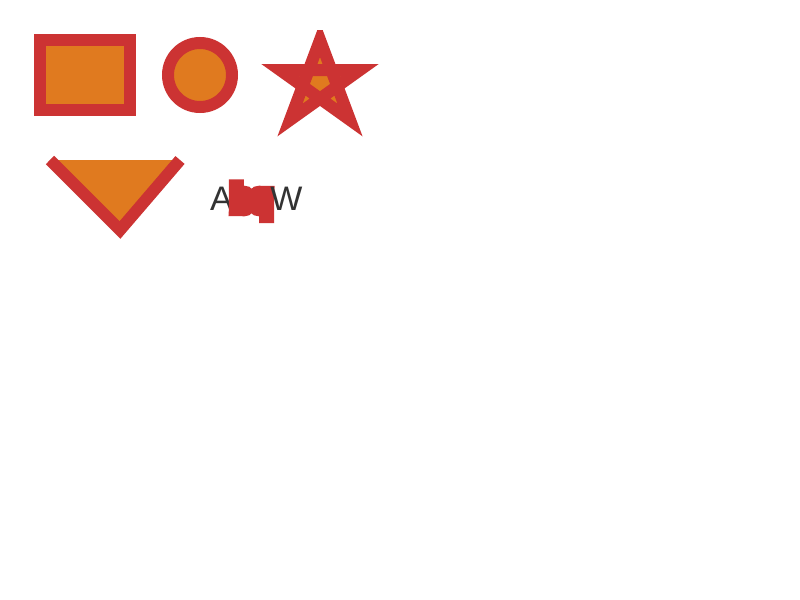
| Pixels that differ from Chrome | 882 |
|---|---|
| The same, on the page without the declaration | 809 |
| Largest difference on one colour channel | 204 of 255 |
| The same, on the page without the declaration | 204 of 255 |
The pages differ by 882 pixels with the declaration and by 809 without it: more pixels, but each within a pixel of a difference at least as strong on the page without the declaration.
Which values were measured
A match on one example means a match at the value tried. The property’s grammar has one branch, and it carries a measurement.
| Value | Measured |
|---|---|
#e07a1f | same effect as Chrome |
Measured against Chrome 148.0.7778.96 on 5 November 2026, with up to 40 candidate values tried per property. How it was measured